
About university campuses
Main Campus – M. Ikbol street 11, Bukhara, Uzbekistan
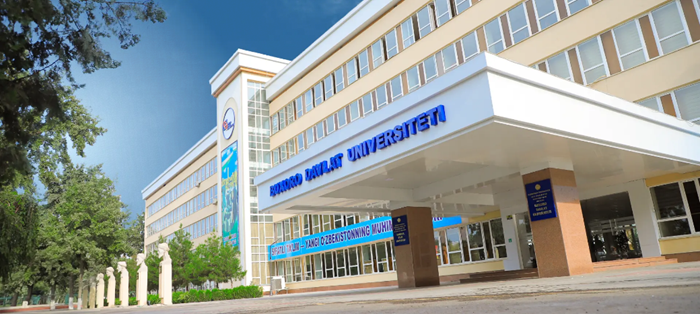
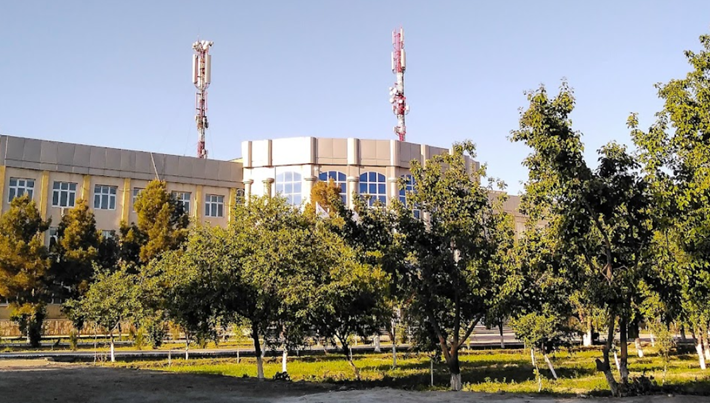
The main campus of Bukhara State University is the largest campus at 180,093.92 square meters. The campus is located in the city center (300 meters from the regional administration building), which makes it convenient to reach the university population using private and public means of transport. The main campus is the oldest one among all campuses of the university and has been used since the university’s establishment in 1930. It includes three five-stored structural blocks with administrative offices, lecture halls, classrooms, and faculty rooms; six four-stored blocks of the dormitory, a media-resources center with a library; one sports hall with a gym and one wrestling hall; one large football pitch, two mini-football pitches with artificial grass surface, two handball courts, three volleyball courts, two basketball courts, a summer and a winter canteen; a parking area for up to 150 cars. The faculty of economics and tourism, the faculty of natural sciences, the faculty of history and law, the faculty of sports activities and pedagogy, the faculty of information and communication technologies, and the faculty of physics and mathematics are stationed on the main campus.
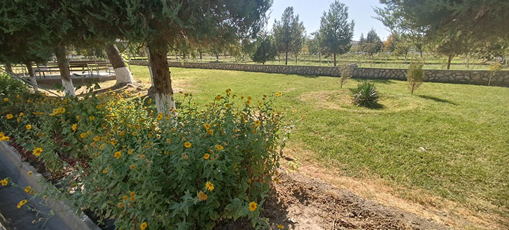
The main campus of the university is located in an urban area with a medium rate of forest trees inside. The campus is standing in the street of Mukhammad Iqbol which is located in the centre of Bukhara city. The campus is surrounded by a residential area (apartment blocks separated by traffic roads) from the east, buildings of public organizations from the west, a campus of the presidential school from the south, and Independence Square from the north (separated by traffic roads). The campus was founded in 1930. The area of Bukhara city is 143 square kilometers. The population of the city is 291600 people. The population density of the city is 1673 inhabitants per km².
Foreign Languages Campus
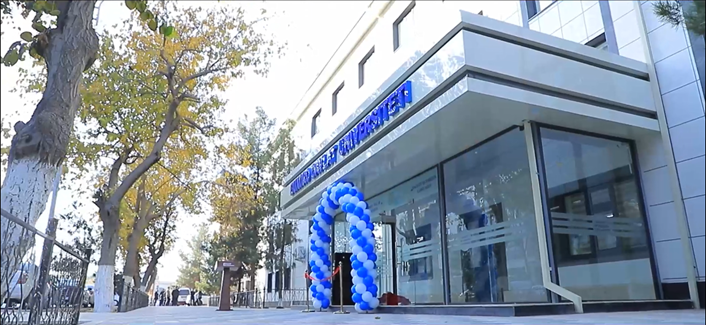
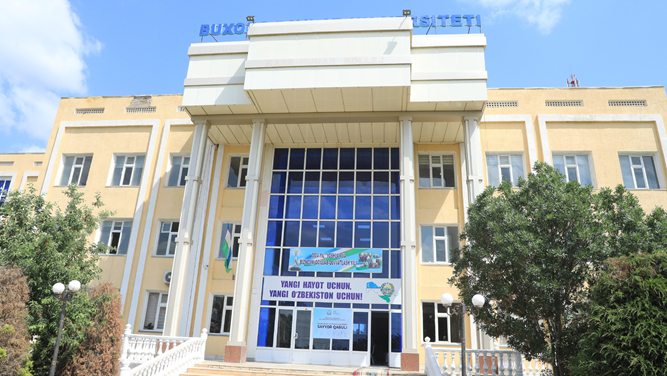
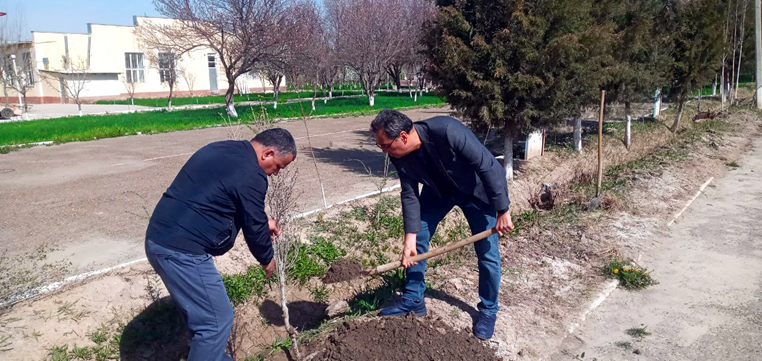
The campus of foreign languages faculty is 5636.72 square meters and located within 15-minute walking distance from the main campus, which is also the central part of the city. The recent renovations of the campus were completed in November 2022 and the faculty of foreign languages received the facilities for use. Built in 1990, the main campus had formerly functioned as a business school and as the faculty of arts (former fine arts) of Bukhara State University. The campus of foreign languages includes a four-stored main building with classrooms, a library, a media-center room, and study rooms. In addition, the campus lies in vegetative areas with fruitful and decorative trees. All five departments of the faculty (English linguistics, English literature and translation studies, interfaculty foreign languages, French philology, and German philology) operate on the campus.
The campus of foreign languages faculty is also located in the central area of Bukhara city, on Hamza Street, and 500 meters away from the main campus. The campus is surrounded by a residential area from the east (separated by a traffic road), the area of the Bukhara commodity exchange market from the south, a construction site from the west, and a restaurant area from the north. Major hotels and boutique shops of Bukhara city stand on the territory where the campus of foreign languages is situated.
Agronomy and Biotechnology Campus
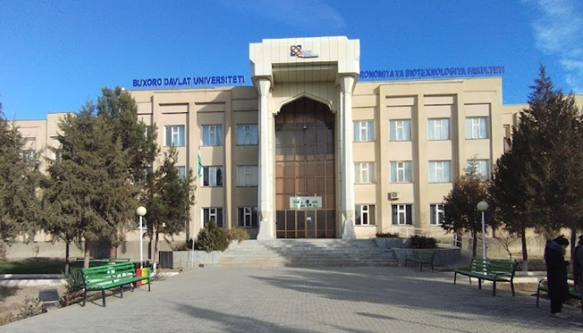
The campus of agronomy and biotechnology faculty is 432,667.15 square meters and is located in the area of Bukhara district, to the northwest of Bukhara city. The campus is 9.4 km away from the main campus. It includes a football pitch, a greenhouse for lab classes, and a tree-stored main building with a library, classrooms, lecture rooms, study rooms, a media center, and a gym. The main building is surrounded by planted areas with fruitful, pine and mulberry trees. The main building was built in 1993 and operated as a primary school before becoming a part of Bukhara State University. All four departments: the Department of Botany and Plant Physiology, the Department of Zoology and General Biology, the Department of Biotechnology and Food Safety, and the Department of Agronomy and Soil Science operate on the campus. The students study in Full-time, part-time and evening forms of education, in 10 disciplines. In total, more than 65 professors and staff members work at the faculty.
Philology Campus
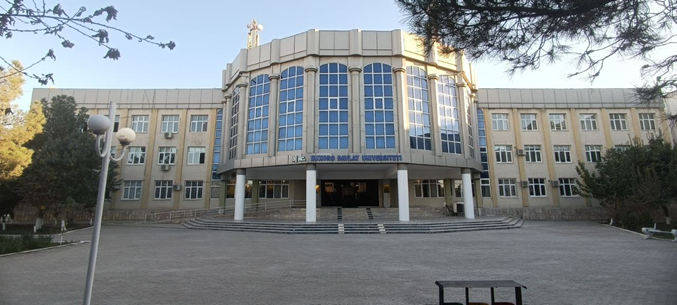
The philology faculty campus is in the south of Bukhara. It is 13729.3 square meters and located 3.3 km away from the main campus. The campus includes a three-stored main building with a library, classrooms, lecture rooms, study rooms, a media center, and a gym as well as a planted area with fruitful, pine and mulberry trees. The campus was constructed in 2010 and operated as the academic lyceum of information and communication technologies before joining Bukhara State University in 2020. All four departments: Uzbek literature, Uzbek philology and journalistics, Russian literature, and Russian philology operate on the campus.
The campus of the philology faculty is standing on Alpomysh Street. The campus is surrounded by residential areas from the east (separated by road) and south, the area of a bank from the north, and the area of a sports complex from the west. The city territory of the campus is called the sixth micro district which is the southern outskirt of Bukhara city.
The Universal Sport Complex
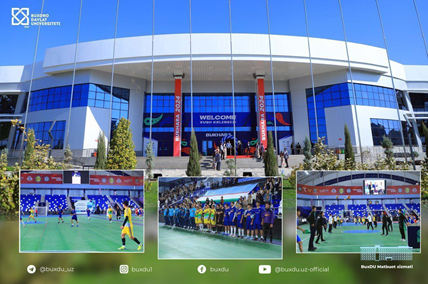
The Universal Sport Complex of Bukhara State University is a newly constructed campus for the Faculty of Sports and Physical Culture. It is The campus’s total area is 89,537.04 m², including the main sports building, a media centre, a parking area, a football pitch, and tennis courts. The main sports building comprises classrooms, lecture rooms, a conference hall, and a central sports hall, capable of hosting various sports competitions. The Universal Sport Complex is surrounded by residential areas to the north, east and south, making the campus easily accessible for both university students and the local population.
Soktare Campus
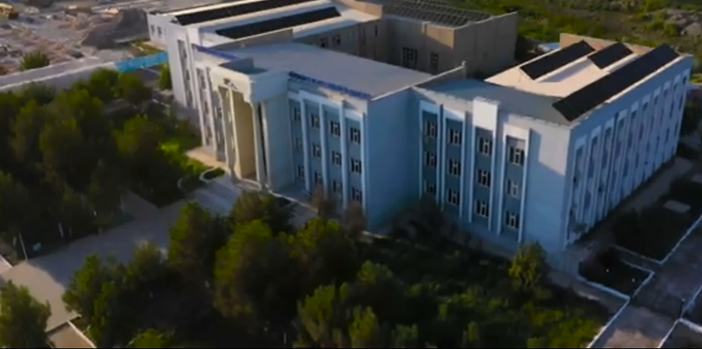
Soktare campus of Bukhara State University is located in Gijduvan province of Bukhara region which is 62 km away from the main campus. It is 125,745.06 square meters located in a rural area. On the Soktare campus, Students study in extramural bachelor programs of arts and humanities, life sciences, physical sciences, and social sciences. The campus includes one three-stored main building with classrooms, a library, a lecture hall, a media center, a sports hall, and a gym. The main building is surrounded by a vegetative area where fruitful and decorative trees grow. The majority of the campus area is occupied by cultivated lands. Shuttle buses and minivans are available for students who commute from Bukhara City. The campus carries the name of the Soktare township, it is surrounded by a rural residential area. Shuttle buses and minivans are available for students who commute from Bukhara City.
Academic Lyceum Campus
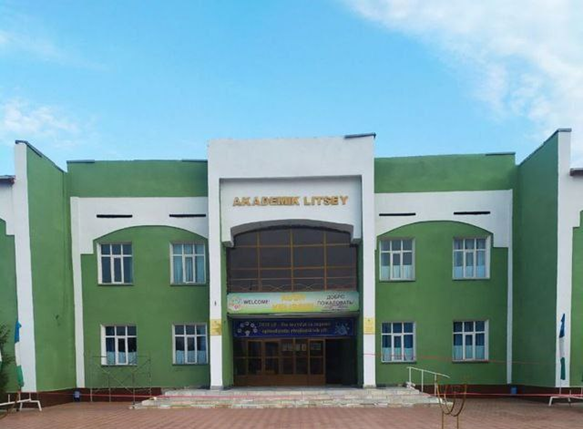
The academic lyceum campus is located in the Qorakol province of Bukhara region and 63.4 km away from the main campus, it is 36,667.84 square meters and is located in a rural area. The campus includes a three-stored main building with classrooms, a library, a lecture hall, a media center, a sports hall, and a gym. The main building is surrounded by a vegetative area where fruitful and decorative trees grow, there is a football pitch, a mini-football pitch, basketball, and volleyball pitches on the campus. The Lyceum offers specialized programs in arts and humanities, natural sciences, and life sciences. Its school of mathematics is one of the best in the country. The campus is surrounded by homestands and country houses, and a canal flows from the north to the south on the western side of the campus.
Total campus area
| Campus area | Area m2 | Distance (meters) |
| Main campus | 180,093.92 | 1,990.00 |
| Campus of foreign languages | 5,636.72 | 307.19 |
| Campus of agronomy and biotechnology | 432,667.15 | 956.97 |
| Campus of philology | 13729.3 | 483.73 |
| University Sport Complex | 89,537.04 | 1,300.00 |
| Soktare Campus | 125,745.06 | 1,470.00 |
| Korakol Academic Lyceum campus | 36,667.84 | 781.59 |
| Total | 884,077.03 | 7,289.48 |
Total campus buildings area
| Campus | Building name | Area (m²) |
| Main campus | Main building, museum, media center and summer canteen | 17703.45 |
| The second building and the test center | 20309.45 | |
| Dormitory and wrestling hall | 27999.78 | |
| Sports hall and new dormitory building | 6128.11 | |
| Campus of foreign languages | Foreign languages buildings area | 5001.6 |
| Campus of agronomy and biotechnology | Biotechnology and agronomy buildings area | 12752.43 |
| Campus of Philology | Philology buildings area | 8277.42 |
| Universal Sport Complex | Universal Sport Complex buildings area | 32680.44 |
| Soktare Campus | Soktare buildings area | 5080.46 |
| Lyceum campus | Lyceum buildings area | 9276.00 |
| Total | 145209.14 |
Ratio of open space toward total area
Openspace name | Total Open Space area | Duration (in Hours per Weeks) |
| Main campus open space | 156160.1 | 105 |
| Open space of foreign languages campus | 4386.32 | 105 |
| Open space of agronomy and biotechnology campus | 427711.04 | 105 |
| Open space of philology campus | 10970.16 | 105 |
| Open Space – Universal Sport Complex | 87495.19 | 105 |
| Open space of Soktare campus | 123668.68 | 105 |
| Open space of Lyceum campus | 32029.84 | 105 |
| Total | 842421.33 |
Forest vegetation area
| Forest vegetation area | Total area m2 | Distance meters |
| Main campus | 64,591.57 | 3340 |
| Foreign languages campus | 589.55 | 98 |
| Agronomy and biotechnology campus | 237531.62 | 2196 |
| Philology campus | 1810.6 | 175 |
| Soktare campus | 21770.16 | 1520 |
| Lyceum campus | 13191.08 | 1100 |
| Total | 339,484.58 | 10589 |
Total planted vegetation area
| Total planted vegetation area | 512,961.87 m2 |
| Total campus area | 884,077.03 m2 |
| Percentage area | 58% |
Water absorption besides the forest and
planted vegetation
| Total water absorption area | 158,468.95 m2 |
| Total campus area | 884,077.03 m2 |
| Percentage area | 18% |
University budget for sustainability
| 2022 | 2023 | 2024 | Average | |
| Budget Total | $14 904 994.50 | $10 376 822.60 | $12 351 828.49 | $12 544 548.53 |
| Sustainability Budget | $5 072 877.40 | $2 235 784.30 | $2 778 366.37 | $3 362 342.69 |
| Average Percentage | 26.80% |
Campus facilities for disabled, special needs, and/or maternity care
Percentage of operation and maintenance activities
| Total campus buildings area | 112528.7 m2 |
| Total operated building | 106902.3 m2 |
| Percentage of buildings that operated and maintenance | 92% |
Campus facilities for disabled and special needs
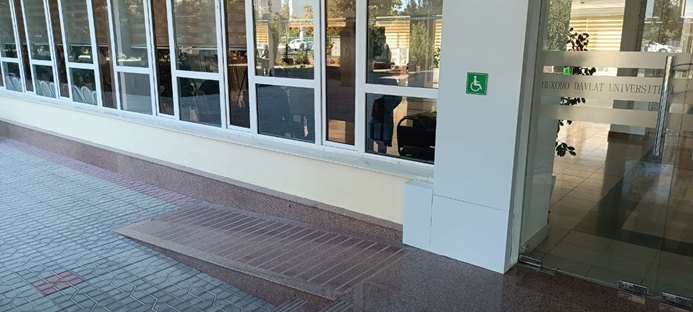
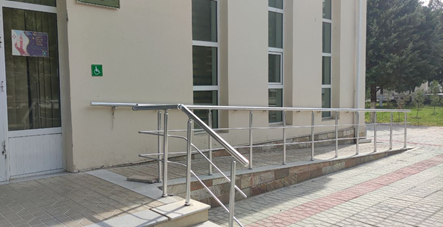
- Ramp access at the entrance of and inside the main building, and students’ dormitory.
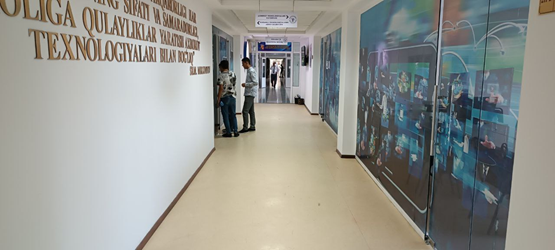
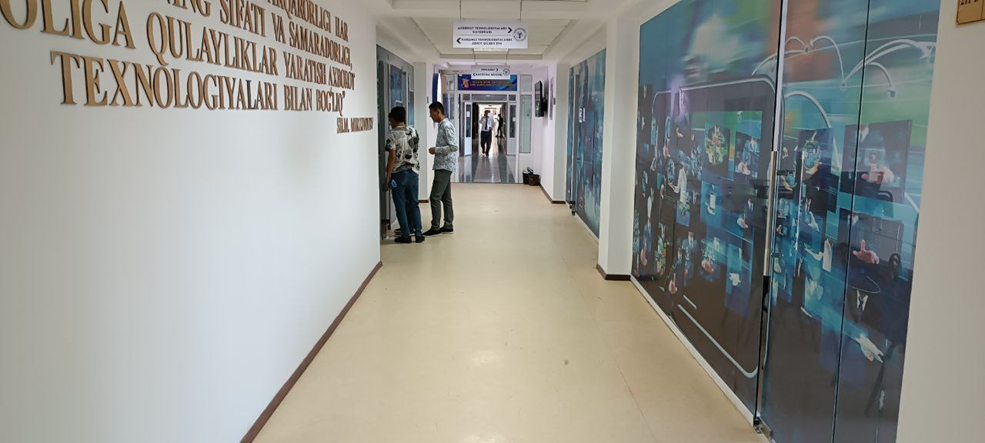
- Wide corridors to fit two wheelchairs at the same time and provide maneuverability
- Restroom for the disabled in the main building of the main campus
- Parking space with signage on the parking area of the main area
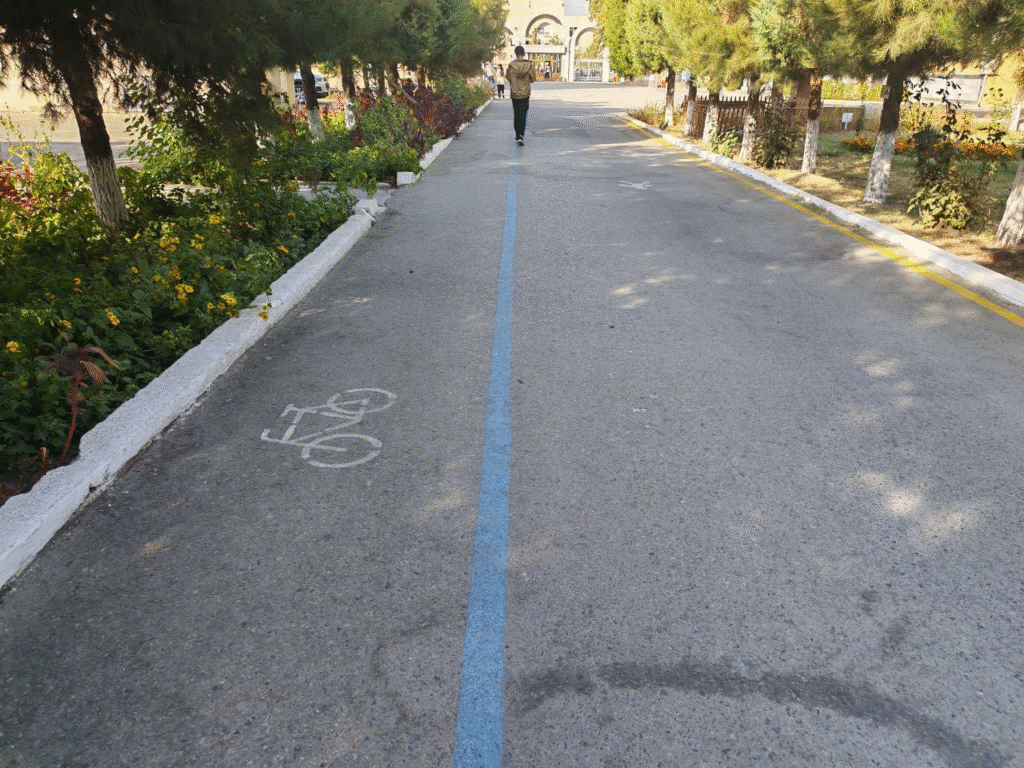
- Walking and cycling tracks
Security and safety facilites
- CCTV at the entrance of the main building of the main campus (Bukhara state university, Uzbekistan)
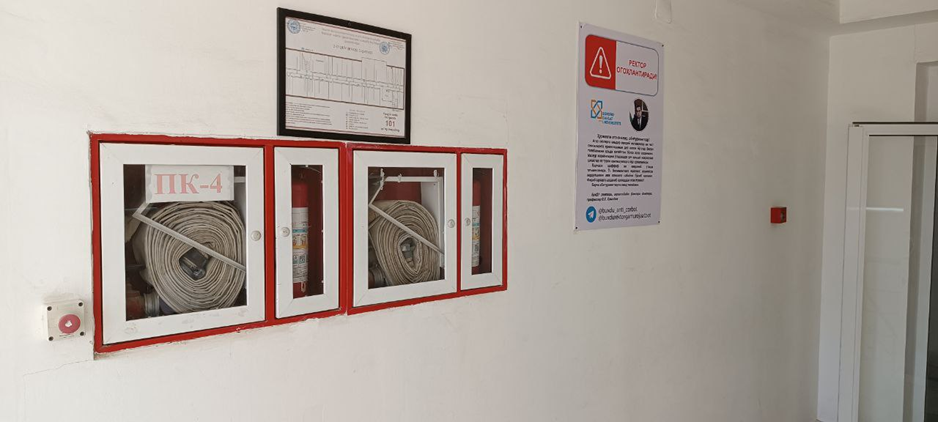
- Fire Hydrant and fire extinguishers are ready to use in every building (Bukhara state university, Uzbekistan)
- Fire alarm buttons are placed adjacent to the Fire Hydrant and fire extinguisher stations (Bukhara state university, Uzbekistan)
- Posters on the human safety measures are placed on the walls of all university buildings (Bukhara state university, Uzbekistan)
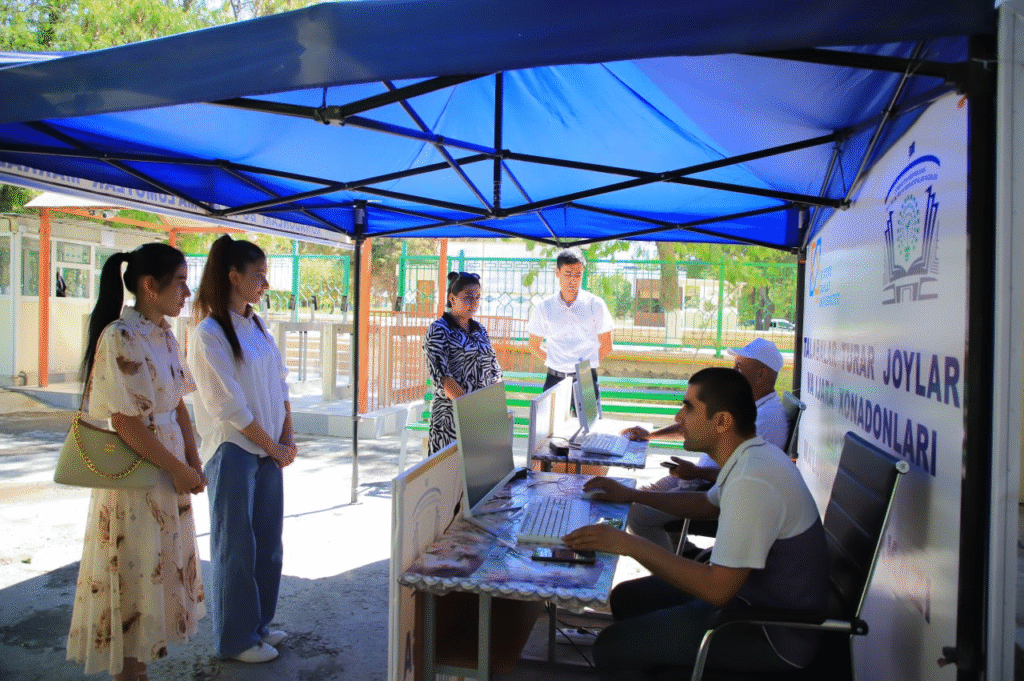
- Posters on fire, technology and electric safety Security checkpoints are located at all entrances of the campuses (Bukhara state university, Uzbekistan)
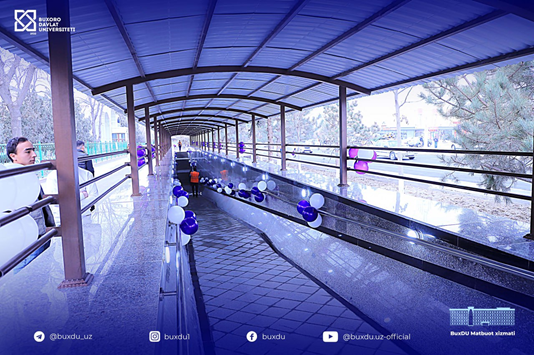
- Construction of underground crossroad in front of the main campus entrance (Bukhara state university, Uzbekistan)
- Underground passage in front of the main entrance of the main campus
- FACE ID control at the campus entrance
Health infrastructure facilities for students, academics, and administrative staff’s wellbeing
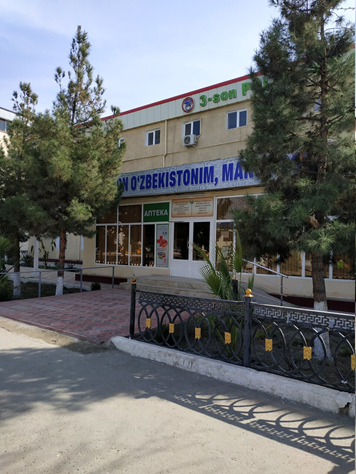
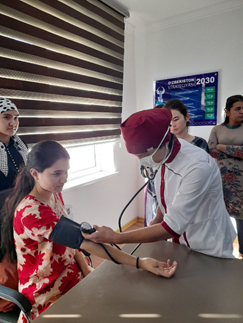
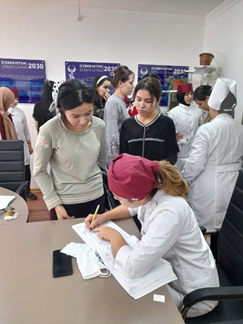
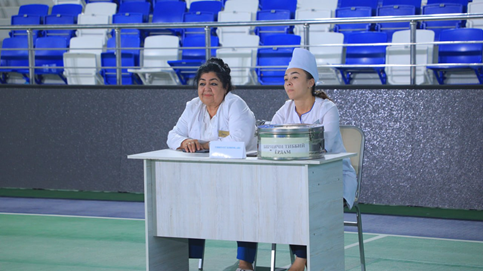
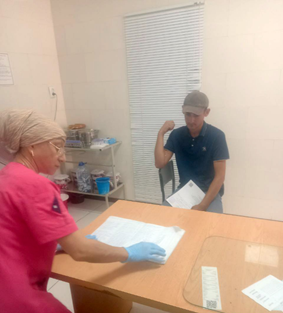
- Local government polyclinic that is only 500 meters away from Bukhara State University and offers free healthcare services for the university staff and students
- Specialized medical service points are also available in every block of the university campus
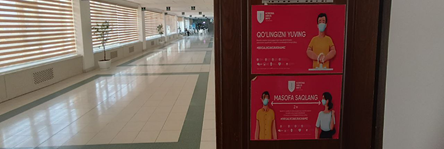
- Posters on preventing Covid-19 outbreak
- University certified medical personnel provide healthcare services to the university staff and students in the emergency rooms and across university campuses
- The university first aid personnel are always ready for any emergent situations that might occur at the university. Classes involving physical and outddor activities are always under the first aid personnel surveillance.
- Emergency rooms operate in the university study blocks, sports hall,and the gym.
Current collaborations with health institutions
Bukhara State University has established collaborations with global, national, and local health institutions to improve health and well-being outcomes.
On May 3, 2024, a delegation, represented by the founder and president of the Himchan Hospital, Pr. Lee Su Chan, the head of its Bukhara branch, Lee Jae Seop, and the CEO of Sangwon Medical Foundation, Pr. Park Hye Young visited Bukhara State University. During the visit, the South Korean delegation met the rector, Obidjon Khamidov, and discussed cooperation between the health institutions and the university. After the discussion, the president of Himchan Hospital and the rector of Bukhara State University agreed to establish a biolaboratory at the university, which will serve joint research projects between Himchan Hospital and Bukhara State University.
The university also maintains collaborations with national health institutions to prevent health issues among the university population. On March 4 2024, the university held a meeting between representatives of the Ministry of the Internal Affairs and students and staff from the Physics-Mathematics faculty. The representatives from the ministry conducted a presentation about HIV, its negative effects and severe social outcomes. During the discussion, the university students and staff asked relevant questions about HIV and received responses that raised their awareness about the infection.
HIV prevention is also a focus of the regional centre for fighting HIV. The university actively cooperates with the centre to enrich students’ knowledge about how the infection spreads and the ways of preventing it. On December 1 2024, the International Day of Fighting HIV, Bukhara State University and the centre for fighting HIV in Bukhara organised an informative session for the university students and staff to present about the situations leading to the infection and inform about preventive methods that countries worldwide use to fight HIV.
Health outreach programmes
Bukhara State University actively maintains outreach programmes and projects that promote a healthy lifestyle in the local community, including trips to communities, sports events, and on-campus informative sessions on healthcare.
On December 15 2024, the university organised a psychological training at a military base in the Karaulbazar district, led by Professor Nozira Musinova. The training focused on building healthy relationships in families of military people who often have to relocate due to work duties. Military personnel and their family members attended the training, gaining insights into creating a friendly environment and maintaining mental health within a family setting.
Another outreach programme involved a sports festival. On October 24 2024, the university hosted the sports event in its newly built Universal Sports Complex. At the beginning, the rector of Bukhara State University delivered an opening speech, emphasising that the newly built sports facility will serve not only sports professionals, but also the entire population of Bukhara, who can engage in sports at the complex to maintain a healthy lifestyle.
Furthermore, the university organises a monthly running marathon that involves the university staff, students and local communities. In 2024, the university held several morning running campaigns called “5000 Healthy Steps”, which involved the university leadership, academic staff, students and runners from the local community who also participated in the sports event. The runners set off at the main campus football pitch and walked 5000 steps across the campus and in the neighbourhood, finishing at the main entrance.
Shared sports facilities
A newly built sports complex, Universal, is a multi-purpose facility that can function as an arena for various types of sports, including futsal, volleyball, basketball, boxing, wrestling and more. The sports complex provides a training place for sports professionals and an opportunity for local people to maintain a healthy lifestyle by engaging in various physical activities.
The sports complex is located in the heart of Bukhara City and operated by Bukhara State University. From October 2024, the sports building was open to the public for various purposes, including solo concerts, sports competitions and festivals, cultural events, and celebrations.
Furthermore, the university’s main campus sports hall is shared with the local community to engage in various sports activities. From September 2024, the sports facility has hosted the Para powerlifting club, which fosters powerlifting professionals among people with disabilities. Additionally, the sports hall is home to the university’s boxing club, which involves young people from the university and the local community who train at the sports hall to become professional boxers.
Sexual and reproductive health care services for students
Bukhara State University provides sexual and reproductive health care services through its healthcare office. The healthcare office conducts periodical health check-ups, involving female students who receive consultation on health-related concerns, including sexual and reproductive matters. On November 12 2024, the healthcare office department launched a campaign promoting a healthy lifestyle among females who received advice on maintaining health, avoiding infections, detecting symptoms and their early treatment.
Mental health support for students
Mental health support for staff
Bukhara State University support mental health through a healthcare office, staff of psychologists, and intellectual events that enhance mental well-being for students and staff.
The healthcare office provides services, including exercises that reduce stress, activities for effective emotional regulation, advice on balanced nutrition, and medication management, while the psychologists’ staff services include group sessions on dealing with life challenges, academic and career struggles, as well as personal coaching.
Additionally, the healthcare office and psychologists often combine their efforts to organise supportive initiatives for mental well-being, including surveys, interactive events, and informative sessions.
On February 26 2025, the healthcare office and psychologists’ staff conducted a survey at the faculty of agronomy and biotechnology addressing students’ emotional well-being. The survey revealed that there were students under strong emotional pressure, dissatisfied with the events occurring in the surrounding environment, and with low spirits. The survey was part of a new approach, which not only identified students’ emotional condition with increased precision, but also gave specific suggestions to enhance mental health. Such suggestions included activities that improve students’ attention and memory, build meaningful thoughts and regulate emotions.
The university’s practitioner-psychologist, D. Hamdamova, held a meeting with Arts faculty students on April 27 2024, and with History faculty students on September 25 2024, discussing crisis cases in the family. Pr. Hamdamova highlighted the main causes of such household issues and gave suggestions on how to prevent crises and mitigate negative outcomes. Another event was held with the residents of the Dormitory No. 7 and focused on a frequent mental issue called Neurostania. First, the residents received insights into what causes Neurostania, its symptoms and treatment, followed by a psychological test to reveal students’ Neurostania level and answers to the questions related to the test results.
Additionally, the university organises sports events that improve students’ mental well-being. To illustrate, the university campus in the Gijduvan district hosted a chess competition for part-time students on December 6, 2024, involving more than 100 students who challenged their minds on a chessboard. The chess competition was extremely intriguing until the last match, and all participants were pleased with the opportunity to brush up on their cognitive skills while playing the game.
As for mental health support for university staff, the university’s psychological staff provide periodical sessions to support the staff with their mental health. Specifically, Hamdamova Dilbar and Musinova Nozira held a meeting with tutors focusing on mental health, self-evaluation, and personal development. During the session, the tutors responded to a survey to reveal their emotional condition and received suggestions on how to deal with work-related stress and regulate work-life balance
Another session with tutors was organised in the agronomy and biotechnology faculty, concentrating on skills to cope with problematic students. The training sessions shared insights into how to deal with students’ destructive behaviour using psychological approaches, and responded to the tutors’ most relevant questions.
Additionally, the university organises sports competitions, involving the leadership, administration and academic staff. On December 6 2026, a basketball match between the leadership and academic staff was held, aiming to reduce stress and spend meaningful time with colleagues during non-working time.
Smoke-free policy
According to the rules, all public places in Uzbekistan are smoke-free, and violating this regulation will result in a penalty of 99,000 UZS. Bukhara State University has emphasised this rule in its smoke-free policy, which states that:
Smoke-Free Policy of Bukhara State University
1. General Provisions and Objectives
Purpose of the policy — to protect the health of staff, students, and visitors from the harmful effects of tobacco and electronic cigarettes, and to create and maintain an environment that promotes a healthy lifestyle. This is in line with the Law “On the Restriction of Distribution and Consumption of Alcohol and Tobacco Products” No. ZRU-844 of 24.05.2023 (entered into force on 26.08.2023).
2. Scope of Application
The policy applies to the entire university territory: academic buildings, dormitories, libraries, canteens, corridors, courtyards, sports facilities, and other public areas — both indoors and outdoors.
It covers all forms of tobacco use, electronic cigarettes, hookah, and similar nicotine-delivery devices.
3. Smoking Ban
Smoking is strictly prohibited in all public areas of the university, including tobacco products, electronic cigarettes, hookahs, and other nicotine-containing devices, except in designated smoking areas if such spaces are officially provided.
Conservation: plant, animal, and wildlife, genetic resources for food and agriculture secured in either medium or long-term conservation facilities
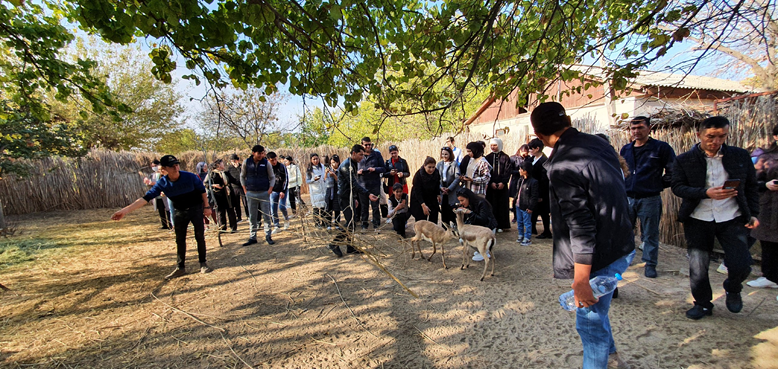
- “Jayron” conservation area works in collaboration with Bukhara State University on the preservation program aiming at protecting rare desert species such as Bukhara sheep, gazelles, and Volga horses. The preservation of these animals in the local surroundings involves sufficient knowledge and expertise. Within the preservation program, professors from Bukhara State University frequently commute to the Jayron eco-centre to observe the inhabitants and find solutions to improve their adaptability and preservation.
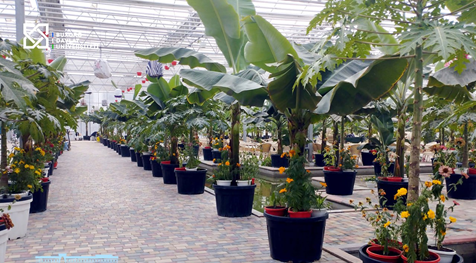
- VARNET greenhouse complex works in collaboration with Bukhara state university on the cultivation and preservation trees and plants typical for tropical climate. This is carried out through the research of professors from the university specialized in the agronomy. Within the program, the experts from the university and Varnet study aim to create natural conditions backed by the modern greenhouse technology to facilitate the cultivations of tropical fruit, including bananas, pineapples, maracuya and dragon fruit.
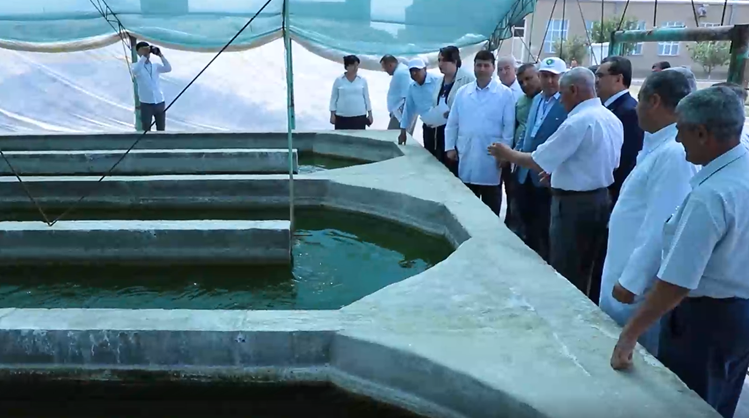
- Fishery farm of agronomy and biotechnology faculty maintains river fish preservation within the artificial environment through proper feeding, timely water filtering and filling with necessary nutrients.
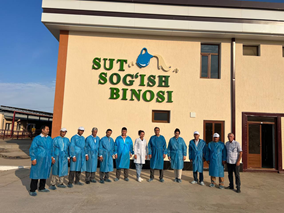
- Cattle farming plant of “Buxoro Agroklaster Chorva” LTD, operates in collaboration with Bukhara state university
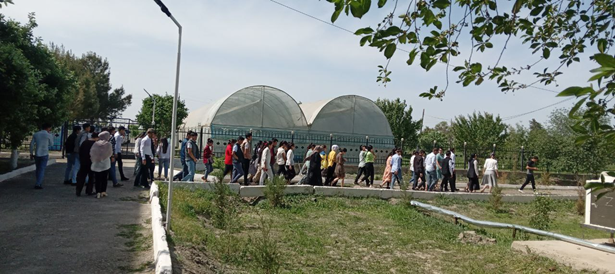
- Greenhouse of agronomy and biotechnology faculty
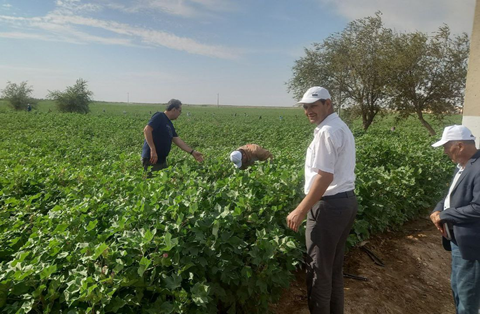
- Secured fields for growing cotton through drip irrigation of “Buxoro Agroklaster Chorva” LTD, operates in collaboration with Bukhara state university
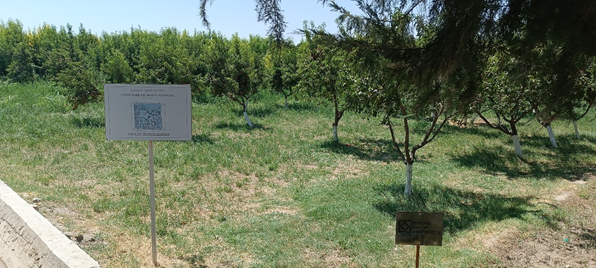
- Bukhara State University supports the cultivation of a rare peach type that grows within throughly maintained preservation.
Planning, implementation, monitoring and/or evaluation of all programs related to Setting and Infrastructure through the utilization of Information and Communication Technology
| Stage | Activities/Programs | ICT Utilization | Evidence | Timeline | Responsible Team/Department |
| Planning | Improvements of a digital campus management system | Use of digital campus management system for planning and coordination | Project proposals, meeting minutes, digital planning documents, https://uniwork.buxdu.uz/index.asp | Ongoing | ICT Committee, Academic affairs, Quality education departments, Facility management department |
| Implementation | Installation of smart classroom technology | Deployment of interactive whiteboards, digital projectors, and video conferencing systems | Purchase orders, installation reports, user manuals | Jan 2024 – Dec 2024 | ICT Dept, Facility Management, Financial department |
| Monitoring | Regular audits of network infrastructure and classroom technology usage | Network monitoring tools, usage analytics software | Audit reports, network performance metrics, usage statistics | Jan 2024 – Ongoing | ICT Dept, Academic Affairs, Quality education department |
| Evaluation | Assessment of ICT impact on teaching and learning outcomes | Surveys, feedback forms, and data analysis tools | Survey results, feedback summaries, academic performance data | Dec 2024 | ICT Dept, Academic Affairs |
| Revision | Improving attendance tracking and campus security tools | Installing FACE ID entrance control | Purchase orders, installation reports, user manuals | Sep 2025 | ICT Dept, Academic Affairs |
Planning: Development of a digital campus master plan
- Activities/Programs: In this stage, the university brings improvements and updates to the digital campus software https://uniwork.buxdu.uz/index.asp. This involves identifying academic and scientific areas, facilities, campus structures that must be integrated into the ICT system.
- ICT Utilization: Digital campus platform https://uniwork.buxdu.uz/ is used to digitalize academic and administrative operations and digital collaboration tools (e.g., Zoom, Google meeting) are used to discuss planning, necessary documentations, and draw the roadmap.
- Evidence: Evidence for this stage includes directions received from the ministry of higher education, initiatives of university leadership, proposals of academic and research staff on adding new features to the platform and improving existing UI and functionality.
- Timeline: Ongoing process
- Responsible Team/Department: ICT Committee, Academic affairs, Quality education departments, Facility management department
Implementation: Installation of smart classroom technology
- Activities/Programs: This stage emphasizes the deployment of smart technologies in classroom settings to improve teaching and learning process. This involves the application of smartboards, wide-resolution projectors, and video meeting devices.
- ICT Utilization: Technologies such as interactive whiteboards (e.g., SMART Boards), digital projectors, and video conferencing systems (e.g., Zoom, Microsoft Teams) are installed.
- Evidence: Purchase orders for the new technology, installation reports from vendors or in-house staff, and user manuals for the new equipment serve as evidence.
- Timeline: Jan 2024 – Ongoing
- Responsible Team/Department: ICT Dept, Facility Management, Financial department
Monitoring: Regular audits of network infrastructure and classroom technology usage
- Activities/Programs: Continuous monitoring of the campus network infrastructure and classroom technology usage to ensure optimal performance and identify areas for improvement. Ongoing examination of the university network and educational technology to maintain proper operation and find ways to further improvement.
- ICT Utilization: Network monitoring software and analytics software (built-in app on https://uniwork.buxdu.uz/) are used to monitor network functionality and technology application.
- Evidence: software reports that provide details of regular checks, network and platform functionality, and usage of smart technologies.
- Timeline: Jan 2024 – Dec 2024
- Responsible Team/Department: ICT Dept, Academic Affairs, Quality education department
Evaluation: Assessment of ICT impact on teaching and learning outcomes
- Activities/Programs: Evaluate the effectiveness of the implemented ICT solutions in enhancing educational outcomes. This involves collecting feedback from stakeholders and analyzing data on academic performance. Assessing the performance of the deployed ICT tools to improve teaching and learning experiences. This includes reviews from academic staff and students on the convenience of using smart classrooms.
- ICT Utilization: Surveys and feedback forms distributed via Online platforms for distributing surveys and reviews (Google Forms, Microsoft forms), and data analysis tools (Excel) to evaluate the collected information.
- Evidence: Review results illustrating the understanding of the new technology by students and faculty, summaries of reviews collected, and academic performance data prior to and after the implementation.
- Timeline: December 2024
- Responsible Team/Department: Institutional Research, ICT Department
Revision: Improving attendance tracking and campus security tools
- Activities/Programs: Improving attendance tracking upon the university’s academic staff request to increase students in-class involvement and upon students’ request to improve campus security tools through face recognition technologies.
- ICT Utilization: Installing FACE ID attendance and entrance control
- Evidence: Purchase orders for the new technology, installation reports from vendors or in-house staff, and user manuals for the new equipment serve as evidence.
- Timeline: September 2025
- Responsible Team/Department: Institutional Research, ICT Department